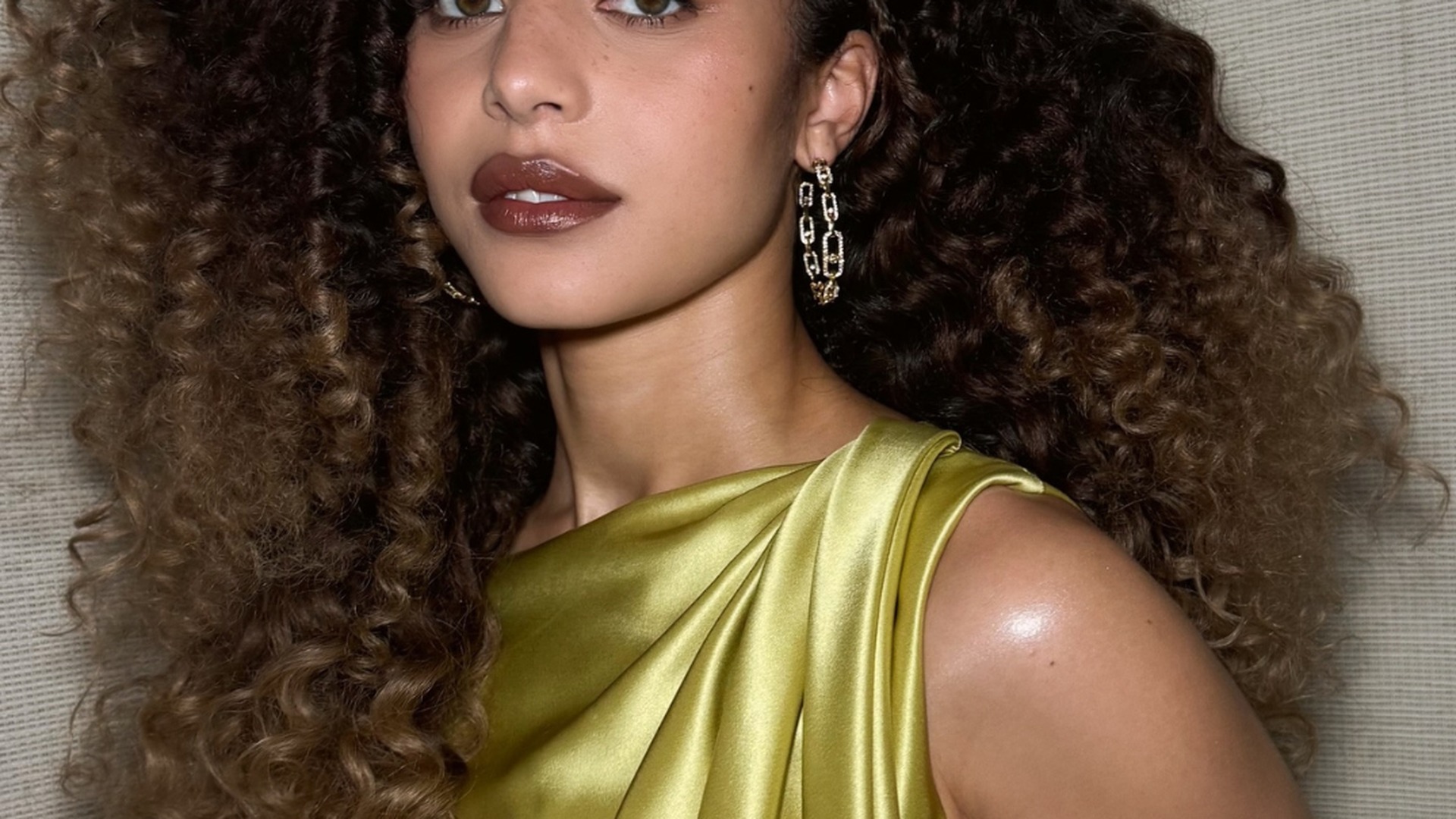
Matte lips had a long autumn reign. Vinyl lips shouted for two seasons. Fall 2026’s stained glass lips sit between them: colour you can see through, shine that behaves like light through a window, and a finish Cosmopolitan’s Beth Gillette, publishing 18 September 2026, describes as translucent enough for natural lip to peek through. Makeup artist Dani Parkes, quoted in that Cosmo fall-trends report, frames the season’s bigger mood as elevated but not precise — sheered, softened, smudged — while clients ask for less morphing and more natural feature lead. For Cover Issue’s beauty desk, stained glass lips how-to is the practical autumn mouth that has not yet been covered on the site beside ghost lashes, toasted makeup, blurred brown French lip, or lived-in kohl.
What “stained glass” actually means
Gillette’s definition is specific: you are not skimping on colour, but the pigment stays translucent, and a glossy lip stain does the dual job of staining longevity plus shiny application. She names MAC Lustreglass Stainglass and e.l.f. Glossy Lip Stain as formulas that land the effect, with bonus points for deep brown or berry to ring in fall. Cosmopolitan India’s Zinobia Mishra, publishing a dedicated how-to on 21 September 2026, expands the same idea into a layering method: sheer washes of colour, glossy layers, and dimension, so the pout catches light like stained glass rather than sitting as a flat opaque block. Vogue’s 2026 lip-trends overview likewise places the season inside juicy, textured finishes over traditional matte armour. Distinct from Cover Issue’s earlier blurred-brown French lip file: that piece was about soft edges and tea-stained diffusion; stained glass is about translucency plus reflective gloss in berry-cherry depths.
Step 1 — hydrate, then wipe
Mishra’s first rule is unglamorous and non-negotiable. Soften dry patches with a rich balm, wait a few minutes, then blot excess so tint does not cling to flakes. A stained glass lip fails when the base is chalky because every sheer layer telegraphs texture. Think of prep as cleaning the glass before you paint it.
Step 2 — sheer tint, not bullet opacity
Apply a mild lip stain or tint close to your natural undertone — soft pink, rosy nude, cherry, or berry — in a thin wash. Build slowly. Mishra’s instruction is explicit: the goal is a wash of colour, not a fully opaque finish. Parkes’s broader “less is more” client brief from Cosmo supports the same restraint. If your usual routine is three full swipes of matte liquid lip, stop at one sheer pass and reassess in daylight.
Step 3 — layer two complementary shades
Here is where stained glass earns its name. Mishra suggests starting with a gentle pink, then tapping a cool brown into the centre — or coral under peach, rose under cherry — so light travels through stacked translucent films. Keep coats light enough that each hue mixes into the next instead of striping. This is also how you avoid the vinyl trap: dimension comes from colour physics, not from a thick plastic topcoat alone.
Step 4 — concentrate depth at the centre
Press a slightly deeper shade into the centre of upper and lower lips, then blend outward with a fingertip for a soft gradient. Mishra’s cherry-over-rose example is a clean fall recipe. Soft edges matter; Gillette’s season thesis is anti-precision. You want a luminous gradient, not a sharp ombré stencil.
Step 5 — seal with high-shine gloss or tinted oil
Finish with clear or tinted gloss focused on the centre for a light-reflective hit — Mishra cites high-shine glosses and notes tinted lip oil as a lighter alternative if sticky gloss feels dated. Gillette’s glossy-stain shorthand is the same destination: stain for hold, shine for the glass read. For low-maintenance days, a berry or rose lip oil alone can approximate the trend without a full layering session.
Optional definition — liner as whisper, not outline
If you need shape for photography, Mishra allows a soft liner slightly deeper than or matched to your natural lip, blended inward before colour. Avoid a crisp cartoon outline that fights the translucent story. Soft definition that disappears under gloss is the brief.
What not to do
Do not stack opaque matte liquid lip under glass gloss and call it stained glass — you will get vinyl-on-chalk. Do not confuse this with Cover Issue’s ghost-lashes file (bare lashes, bold lip) even though both can share a pared eye; stained glass can wear a soft smoke, but the mouth remains translucent, not marker-pen bold. Do not invent product claims beyond the named examples Cosmo and Cosmo India already published. Do not ship an illustrated lip diagram as the cover — Cover Issue’s hard rule is a real beauty photograph; this batch uses an editorial portrait with a glossy deep brown-berry mouth as the visual proof of the trend.
Wear it with fall wardrobe grammar
Stained glass lips love toasted skin, anti-blush cool cheeks, or a soft downward smoke — all adjacent ideas from the same Cosmo fall report — but pick one co-star so the face does not shout in three dialects. Against Paris Fashion Week’s metallic gold and République white drama in this morning’s runway files, a translucent berry mouth is the wearable counterweight: evening enough for a dinner reservation, sheer enough for daylight errands.
SEO cluster for the desk
Primary: stained glass lips how-to. Secondary: fall 2026 glossy lip stain, sheer berry translucent lip, MAC Lustreglass Stainglass, layered lip tint gloss. Attribute Gillette/Parkes (Cosmopolitan), Mishra (Cosmopolitan India), and Vogue’s texture-forward lip framing. Original magazine voice, no invented scandals, no fake before-and-after numbers — just a mouth that lets the light through.