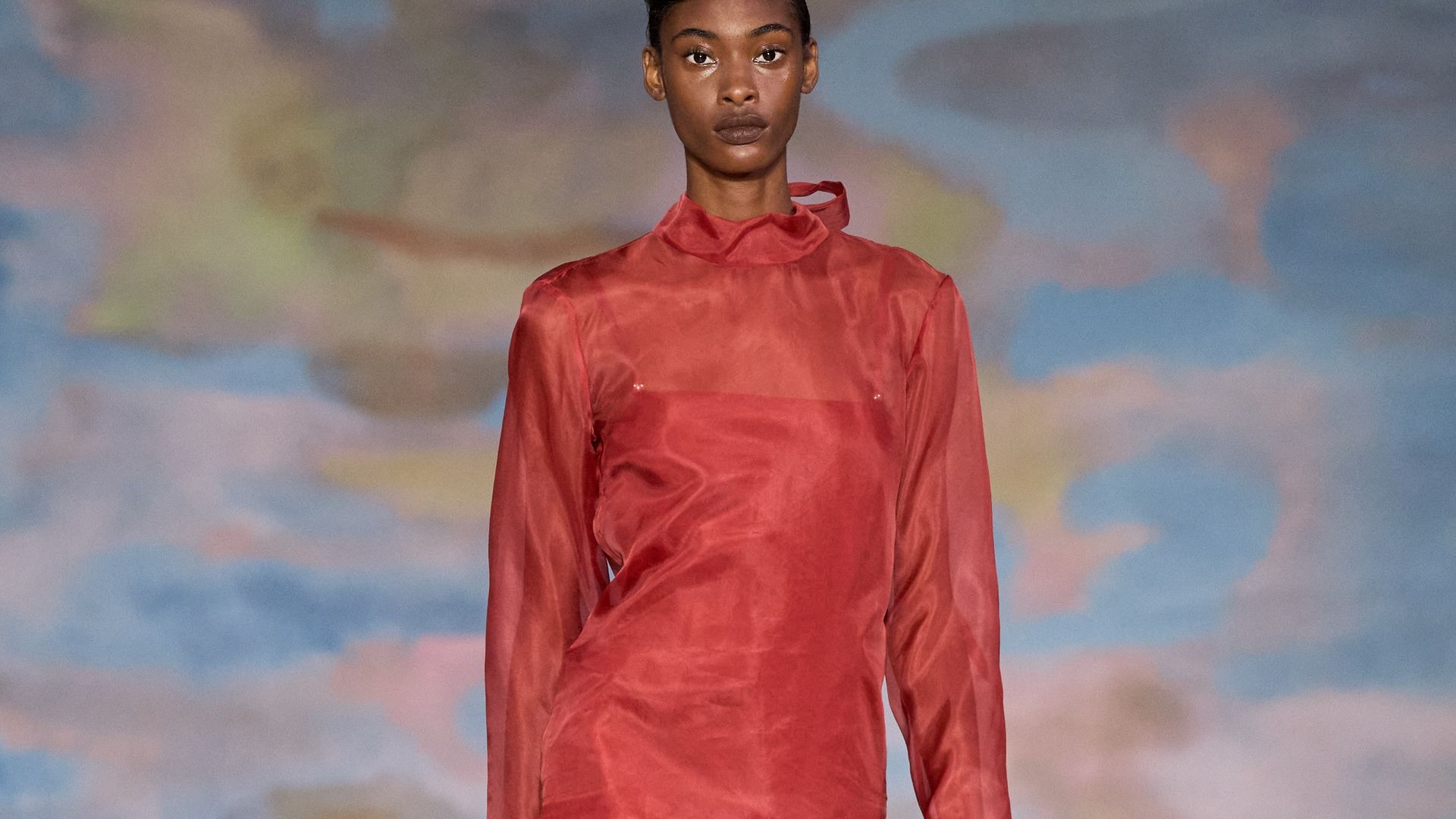
Ahluwalia SS27 did not treat protest research as a reason to strip joy out of the clothes. According to Vogue's Luke Leitch, reporting on 19 September 2026 from London Fashion Week, Priya Ahluwalia presented her spring/summer 2027 collection titled Revel in the basement of the Rosewood London, against a bespoke Ahluwalia-designed wallpaper backdrop by Calico, with a third Puma collaboration on the runway and complimentary low-sugar sodas by Poppi in the room. For Cover Issue's runway desk, Ahluwalia SS27 is the clearest LFW argument yet that resistance and revelry can share the same silhouette.
Joy does not cancel the politics
WWD's Lily Templeton, writing on 20 September 2026, frames the show as an ode to joy in resistance. Ahluwalia began with thoughts of protests and the Black Panthers, Templeton reports, then studied photographs of members off duty and concluded that public activism does not require personal asceticism. That thesis—joy and human connection as radical acts—sits at the heart of Revel. Leitch quotes Ahluwalia after the show saying she will hustle as much as she can to make her dreams come true, and notes that her collection notes ran long even as sponsor notes ran longer. The clothes, both critics agree, were substantial enough to carry the hustle.
FESTAC ’77 as print architecture, not costume nostalgia
Leitch details an abstract red-and-green-on-white print used on an off-the-shoulder wiggle dress, a sectioned soccer shirt, and a Bermuda-shorts-and-shirt set. Ahluwalia told Vogue the motif came from aerial photography and floor plans of the venue built for Festac ’77—the month-long Lagos festival that gathered roughly 16,000 artists and thinkers from across the Black diaspora. Templeton adds that jacquard knits also owed their patterns to that architecture. Ahluwalia SS27 does not dress models as 1977 reenactors; it turns festival infrastructure into wearable graphics that feel energetic rather than archival, a distinction Culted and TheIndustry.fashion also flagged in season coverage without Cover Issue inventing quotes.
Berets, double-layered suiting, and dialed-back decoration
Leitch links angled berets over swish, surprising double-layered suiting and slouchy top-stitched denim to those off-duty Black Panther photographs. Templeton notes that Ahluwalia, known for dense prints and embellishment, dialed decoration back this season so construction could lead: handsome trousers with wrap-around panels, satin tops finishing in cummerbund-like hems, blousons with split sleeves, a sharp blazer with a double panel front. After the show, Templeton writes, Ahluwalia told editors a subtle air of West African formality emerged during fittings. That is the commercial spine of Ahluwalia SS27—tailoring that can walk from protest memory into a dinner reservation without costume drama.
Puma drop three, fringe tracksuits, and sportswear as occasionwear
Leitch and Templeton both place the ongoing Puma collaboration inside the same runway, not as a side capsule. Fringed dresses and soccer tops sit beside tuxedo-hemmed tunics for men and minidresses for women; casually cut military shirting loosens the formal register. Industry reporting around the show described bright trainers and fringed tracksuits thrown against silk, sheer dresses, and sculptural skirts—the third drop made visible for the first time on this London schedule. Related Cover Issue runway reading: our Emilia Wickstead SS27 Sloane Street film report at https://thecoverissue.com/emilia-wickstead-ss27-lee-krasner-sloane-street-london and Erdem's Roundhouse Barbette chapter at https://thecoverissue.com/erdem-ss27-barbette-roundhouse-london-fashion-week for other LFW houses rewriting presentation rules.
Organza occasionwear and taking up space
Leitch describes dresses in silk organza shaped into sculptural silhouettes or divided at the midriff to suggest formal uniforms of celebration. That is where Revel's title becomes wearable: occasionwear that treats celebration as a posture of pleasure rather than escape. Templeton ties the finale soundtrack—Jimi Hendrix's 1968 cover of All Along the Watchtower—back to the protest spark that opened the research, arguing the collection ultimately revels in the lives resistance makes possible. Ahluwalia told Vogue the Ahluwalia girl is a myriad of people and their own experiences; Leitch reads that plurality as both broad content and a specific voice.
Calico mural, migration, and why the room mattered
Templeton reports a bespoke Calico Wallpaper mural inspired by bodies of water connecting continents—a metaphor for migration, community, and Ahluwalia's own multicultural heritage. Ahluwalia told WWD she thought about how important migration and human connection are to her presence in the industry. Staging Revel at Rosewood with wallpaper, Puma, and Poppi could read as sponsorship noise; Leitch's point is that the fashion held. For buyers decoding Ahluwalia SS27 lookbooks, the takeaway is clearer construction, FESTAC-derived graphics, fringe-as-glamour on sportswear, and organza that expands rather than constricts.
What Cover Issue is not claiming
Stay inside the sourced frame: no invented Panther interviews, no fabricated client lists, no unsourced private drama. The Vogue and WWD records are enough. Watch how Ahluwalia SS27's wrap-panel trousers, Festac knits, and fringed Puma pieces translate into spring wholesale edits. For now, London's schedule has a house arguing that taking up space can look like a party—and that the party can still mean something.
Read Ahluwalia SS27 beside Mulberry's Christopher Kane leather debut at https://thecoverissue.com/mulberry-at-three-christopher-kane-lfw-ss27 and Simone Rocha's Old Bailey romance at https://thecoverissue.com/simone-rocha-ss27-old-bailey-i-was-trying-to-love-you if you want neighboring London chapters. Revel's wager is louder: joy on the same runway as resistance research, without flattening either into a slogan.
Wholesale and street translation
Buyers reading Ahluwalia SS27 lookbooks should watch for the wrap-panel trousers and double-front blazer as wholesale anchors, with FESTAC knits and fringed Puma pieces as traffic drivers. Leitch's plurality quote matters commercially: the house refuses a single muse silhouette, which means stockists can edit for different cities without breaking the brand story. Templeton's construction praise is the quality signal—dialed-back decoration only works if seams and panels stay interesting up close.
Why London needed this chapter
LFW SS27 already logged Simone Rocha at the Old Bailey, Mulberry's Kane debut, and Emilia Wickstead's Sloane Street film on Cover Issue. Ahluwalia SS27 adds diaspora research that still sells trainers and organza in the same breath. That range is London's competitive advantage when Paris and Milan tighten their own narratives. Stay with Vogue and WWD; do not invent front-row celebrity quotes the reviews did not print.